

Every year, marketing gets a new "everything has changed" moment. This year, it's AI. We've seen plenty of these shifts since 1991: the move from the phone book to websites, from websites to search, and now from search to AI answers.
Each time, some things truly changed, and a lot didn't.
Here's our read on B2B marketing in 2026: what's different, what isn't, and what we'd do about it.
In this article:
1. AI Made Content Cheap. Judgement Is Now More Valuable
2. Search is Changing Again
3. Traditional Media Isn't Dead
4. Brands Still Win Over Time
5. Consistency Beats Bursts
6. Show Up Where Your Buyers Are
7. Measure What Brings People In
8. What We'd Do in 2026
9. The Bottom Line
AI is now part of nearly every marketing team. In the Content Marketing Institute's latest survey of more than 1,000 B2B marketers, 95% said their organizations use AI-powered tools.
Among marketers using AI to create content, 87% say productivity has improved. But the deeper results are thinner. Only 58% say content quality improved, 12% say it got worse, and just 39% say their content actually performs better.
When the most effective teams explained what made the difference, they didn't credit tools. They pointed to the relevance and quality of their content (65%) and the skills of their team (53%).
What we see: When everyone can produce content instantly, content alone stops being an advantage. What matters is knowing which content is worth making, who it's for, and what it should accomplish. AI speeds up the process. It doesn't replace the thinking behind what makes something work.
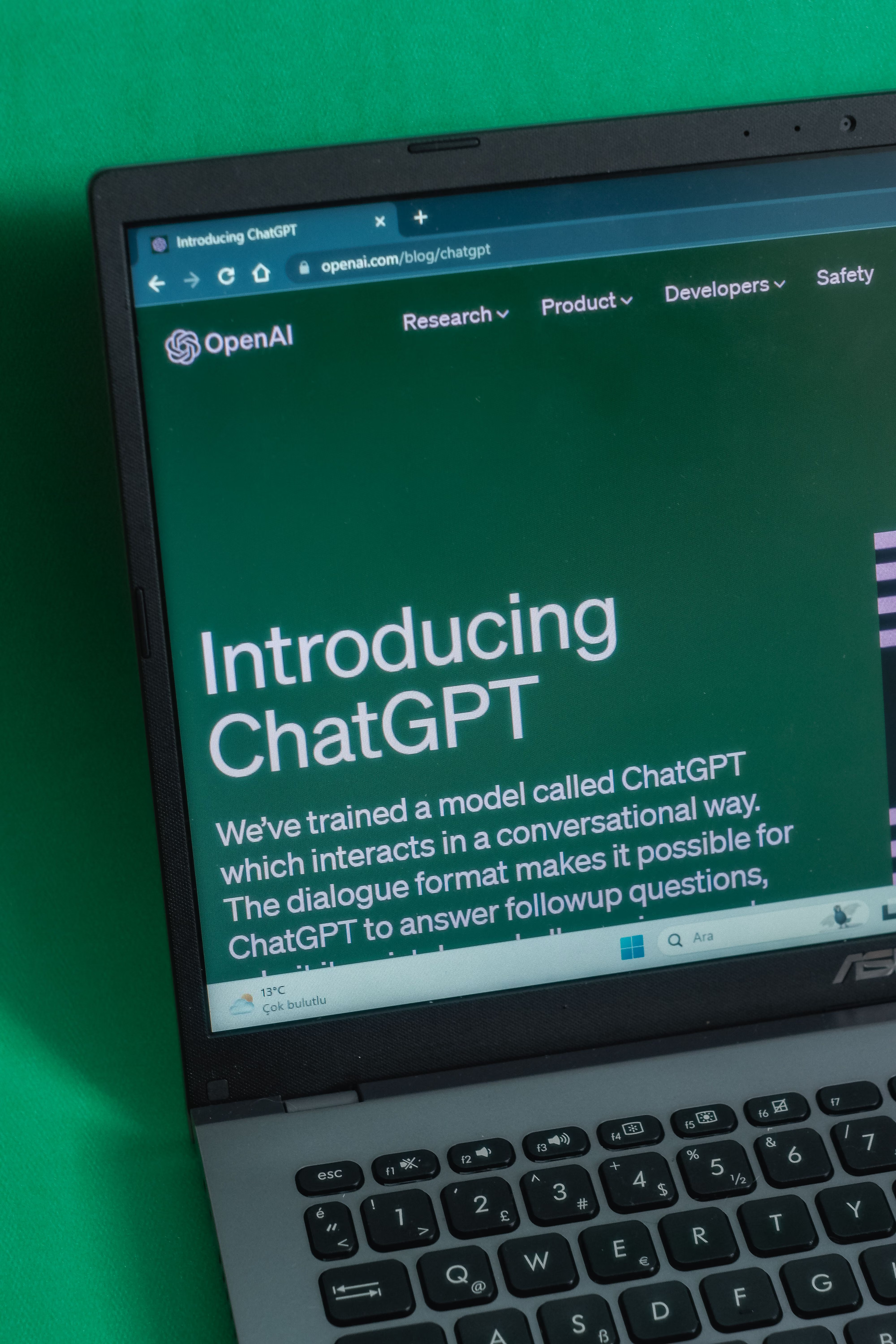
For years, the goal was to rank on page one of Google. Now, AI-generated answers often appear above the search results, and many buyers ask AI tools directly instead of traditional search.
This isn't the first time the ground has shifted when it comes to advertising. We moved clients from the phone book to websites, and from websites to search, without losing them in the transition. The same principles apply now.
What's Working
Clear answers to real questionsWrite content that directly answers what your customers ask before they buy.
Consistent information everywhereKeep your business name, services, and contact details identical across your website, Google Business Profile, and directories.
Proof from other peopleReviews, case studies, and mentions on other reputable sites all signal that you're credible.
Expertise you can point toContent with a real point of view and firsthand experience stands out from generic articles that AI can summarize in a sentence.
It's easy to assume B2B marketing lives entirely online. But B2B buyers are people too. They watch TV, stream shows, listen to the radio, and drive past billboards on the way to work.
What we see:TV, radio, and streaming still work for many businesses, but results depend less on the channel than on how the buy is made. The same budget can disappear into spots that air in the middle of the night, or it can reach the right people at the right time. Some clients came to us after years of buying ads directly from sales reps and rarely hearing a customer say they'd seen them. With better placement, that changed quickly.
What's working:
Placement over volume.Fewer, better-placed spots outperform a larger schedule that runs when no one is watching.
Experienced negotiation. A good media buyer can often get better rates and placement than you could going direct, usually at no added cost, since agency commission typically comes out of the buy itself.
Streaming alongside traditional TV. Streaming reaches viewers who've cut the cord, with more precise targeting.

Campaigns end. Brands compound. One family business we've worked with for about 30 years still uses a short jingle we created for them. Their customers still hear it in their heads. No single campaign did that. Years of repetition and consistency did.
What we see: B2B companies often skip brand building because it's harder to measure than leads. But when a buyer finally needs what you sell, the company they already recognize gets the first call.
What's working:
A consistent look and voice across every channel, every time
A simple, repeatable message people can remember and describe to someone else
Patience. Brand pays off over years, not weeks.
Only 12% of B2B marketers say their marketing exceeded its goals over the past year. The problem usually isn't knowing what to do. It's keeping it going.
Marketers' top challenges tell the story: creating content that prompts action (40%), limited time, people, and budget (39%), and measuring whether content works (33%).
What we see: Most businesses market in bursts. A big push, then silence while everyone gets busy, then another push. Every restart costs momentum. The businesses that grow are the ones whose marketing shows up every month, whether or not anyone has time to think about it.
You don't need to be everywhere. You need to be consistently present where your buyers already spend time. For B2B, that usually starts with LinkedIn and email. When marketers named their most effective channels for thought leadership, 76% included LinkedIn and 54% included email newsletters.
What's working:
LinkedIn for visibility. Posts from owners and leaders often reach more people than posts from company pages.
Email for relationships. Your email list is the one audience no algorithm can take away.
Paid media where it fits. TV, radio, streaming, and digital ads extend your reach beyond people who already follow you.
Sales and marketing working together. Among marketers who said their marketing was effective, 45% credited alignment with sales.
Likes and impressions are easy to track and easy to misread. What matters is whether marketing brings in customers.
What we see: One of the best signs that advertising is working is the simplest: customers coming in and saying, "I saw your ad." When a client hears that for the first time in years, the numbers usually follow.
What's working:
Ask every new customer how they heard about you, and write it down.
Track leads and conversations, not just clicks.
Review results monthly, and move budget toward what's working.
Get clear first. Define who you're trying to reach, what you want them to do, and what makes you the better choice.
Fix your foundation. Make sure your website, Google Business Profile, and reviews give buyers a reason to trust you.
Choose one social platform, probably LinkedIn, and post consistently.
Build your email list, and send emails that are worth opening.
Add paid media where your buyers are, and make sure it's placed well.
Keep your brand consistent everywhere.
Measure what matters, and adjust every month.
The tools keep changing. The fundamentals don't. Know your customer, say something worth hearing, put it where they'll see it, and keep showing up. That's what we've been doing since 1991, and it still works.
Want it done for you?
See our In-House Marketing plans, or let's talk about what your business needs.
More on this:
How to Stay Visible on LinkedIn Without Burning Out
Freelancer vs. Agency: Which is Right For You?
How Often to Post on LinkedIn in 2026
Research source: Content Marketing Institute and MarketingProfs, B2B Content and Marketing Trends: Insights for 2026 (survey of 1,015 B2B marketers, fielded June–August 2025).
Want this done for you? We have been helping businesses like yours since 1991.