


Post daily. Post weekly. Post whenever inspiration strikes. Everyone has an answer, and most of it is guesswork.
In 2026, there's finally enough real data to stop guessing. Here's what it says, and how to turn it into a schedule you can actually keep.
In This Article:
1. The Short Answer: 2-5 Posts Per Week
2. What Two Million Posts Tell Us
3. The Catch Nobody Mentions: Quality vs. Quantity
4. Multiple Posts Per Day: Does It Help?
5. Consistency Beats Volume
6. Finding Your Number
7. Best Times to Post on LinkedIn in 2026
8. The Real Enemy: Start-Stop Posting
9. What This Looks Like in Practice
We get this question constantly. Usually phrased as "what's the optimal posting frequency?" As if there's a setting you can dial in and watch the leads roll in.
There isn't. But there is a range that works, and in 2026 we have enough data to stop guessing.
Two to five posts per week. That's the range where most consultants and small business owners see real returns without burning out or annoying their audience.
Below two, you're not showing up enough for the algorithm—or your network—to remember you exist. Above five, you're probably hitting diminishing returns unless content is literally your full-time job.
Now for the longer answer...
Buffer's data science team analyzed over two million LinkedIn posts from 94,000 accounts. Their headline finding: posting more often helps, and the benefits hold regardless of how big your audience is.
The breakdown:
One post per week keeps you technically active but leaves growth on the table. You're visible enough to not disappear entirely, but you're not building momentum.
Two to five posts per week is where things shift. Moving from once weekly to this range showed roughly 1,200 additional impressions per post and a measurable bump in engagement rate. This is the sweet spot for most people.
Six to ten posts per week continues the climb. Per-post reach keeps improving. But this volume requires either a content team or a level of personal bandwidth most business owners don't have.
Eleven-plus posts per week shows nearly triple the engagements per post compared to once-weekly accounts. But let's be realistic—if you're posting eleven times a week, content is your primary job. That's not most of us.
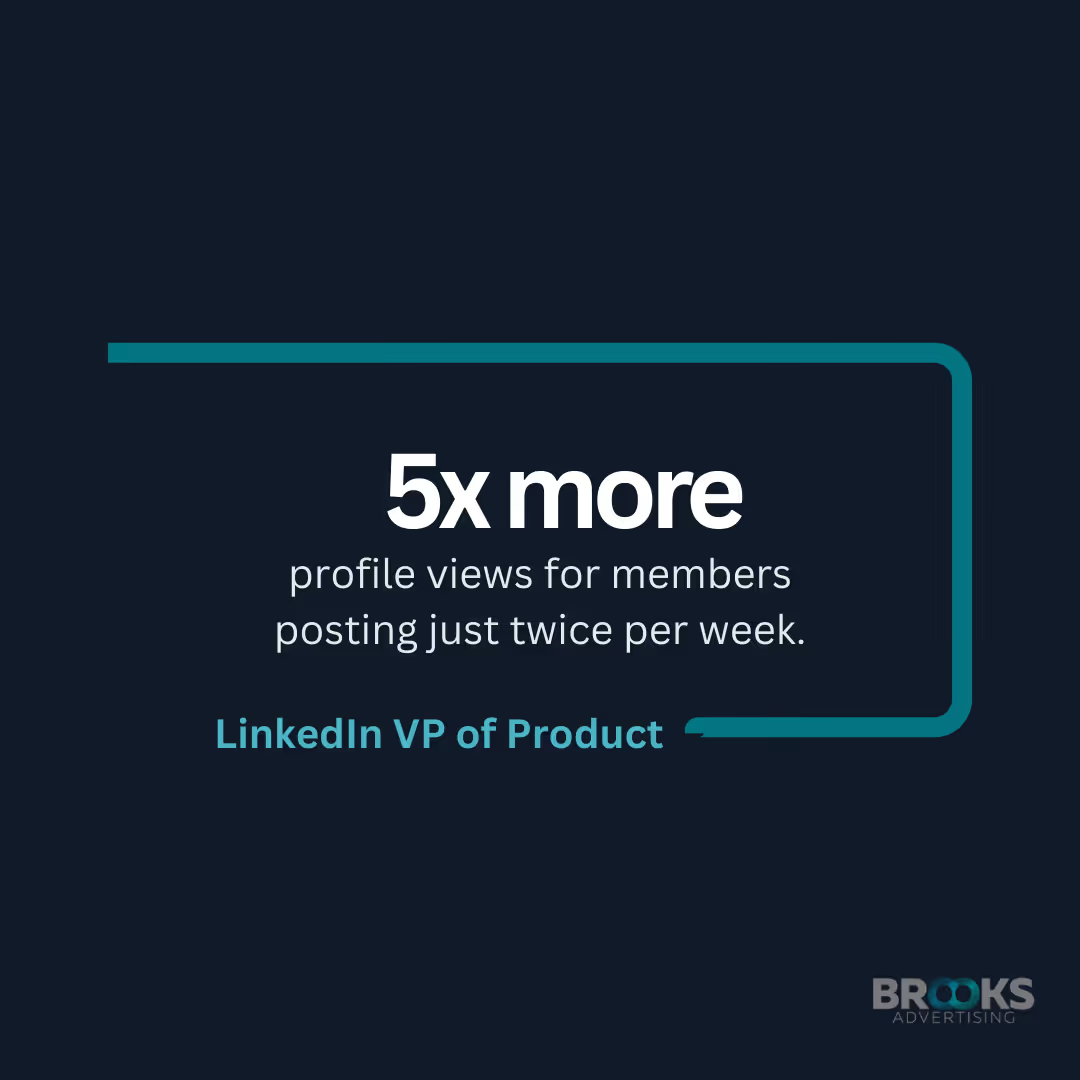
LinkedIn's own VP of Product, Gyanda Sachdeva, publicly recommends 2-5 posts weekly. She also noted that members posting just twice per week see up to five times more profile views than less frequent posters.
Here's where it gets tricky: more posts help on average, but only if each post is worth reading.
Buffer's data scientist was clear about this: post as often as you can, but only as long as quality holds. Low-quality posts published frequently don't get great results. A 2026 LigoSocial study of more than 5,500 company page posts found the same thing from another angle: posting more often didn't hurt engagement, but what companies posted mattered far more than how often they posted.
So the real question isn't "how many posts can I squeeze out?" It's "how many good posts can I sustain?"
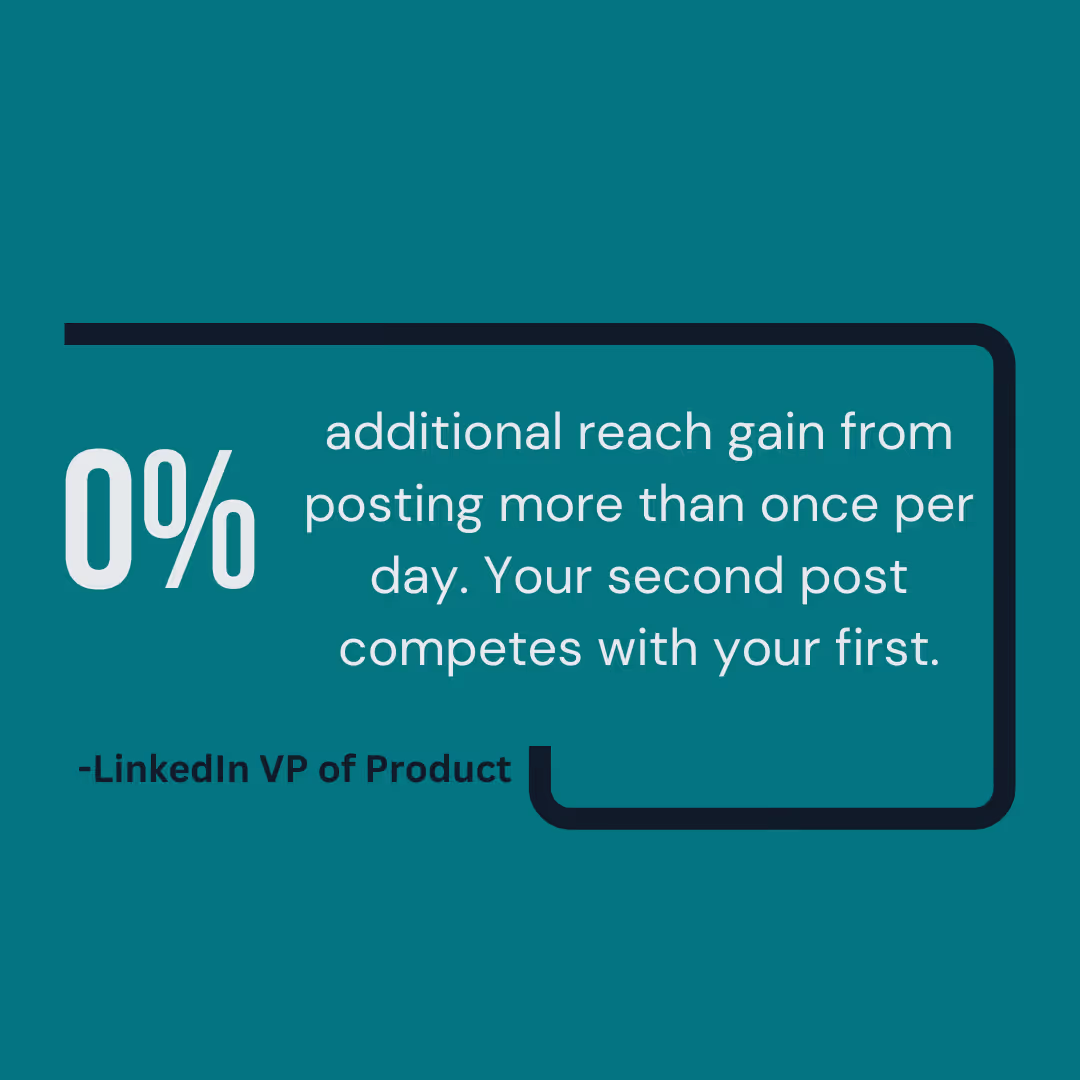
LinkedIn's guidance is clear: posting more than once a day won't hurt your total reach, but it probably won't help either.
Sachdeva has said posting more than once a day won't hurt your total reach, but that people want to see content from a range of voices.
Translation: your second post of the day is competing with your first. LinkedIn will show whichever one seems more relevant to each viewer, which means you're cannibalizing your own distribution.
For most people running a business one post per day is the maximum worth testing. Any more and you're working harder without getting more.
Almost every study on LinkedIn posting eventually says some version of the same thing: consistency beats volume.
Buffer's data team puts it simply: consistency matters more than volume. Posting three times a week, every week, beats posting daily for two weeks and then going quiet. A predictable schedule also makes you part of your audience's routine. If you post every Tuesday and Thursday, people start expecting you. You become part of people's routines rather than an interruption.
The people who build real audiences on LinkedIn aren't necessarily posting more than you. They're just posting reliably.
The most common failure pattern isn't posting too little. It's posting inconsistently.
Someone posts for three weeks, gets busy, goes quiet for a month, feels guilty, posts intensely for a week, burns out, goes quiet again. The cycle repeats until they give up entirely.
Each gap resets your momentum with the algorithm. Each restart feels harder because you've lost the habit. Eventually "I should post on LinkedIn" becomes background guilt that never converts to action.
Breaking this cycle means accepting a simple truth: posting consistently at a lower frequency beats posting in bursts at a higher frequency.
Two posts every single week for six months will build more than ten posts in January followed by nothing until April.
Say you decide on Tuesday and Thursday mornings at 9am. That's your schedule.
You block 60-90 minutes on Friday afternoon to batch-write the following week's posts. You load them into LinkedIn's scheduler or Buffer or whatever tool you use. You walk away.
Tuesday morning, your post goes live automatically. You spend ten minutes engaging—replying to comments on yours, commenting thoughtfully on a few posts from people in your space. Thursday, same thing.
Total weekly time: maybe two hours, including the writing.
That's sustainable. That's a system you can protect even during busy weeks. And that consistency, maintained over months, compounds into an audience that actually knows who you are.
LinkedIn rewards consistency over intensity. The people building audiences aren't posting more—they're posting more reliably. Pick a frequency you can actually sustain. Two or three posts per week is plenty if you show up every single week. Protect your posting days. Batch your content so you're never scrambling.
And when you slip—because you will—restart without drama. Momentum rebuilds faster than you'd expect. But only if you actually restart.
More on this:
How to Stay Visible on LinkedIn Without Burning Out
LinkedIn Content Ideas (That Actually Work)
Should You Outsource Your Content?
Want this done for you? We have been helping businesses like yours since 1991.